Four Systems
Where the Green Work Actually Happens
Energy, emissions, efficiency and materials. Each pillar is a real installation on our Jiangyin site — click through for the detail behind it.
Rooftop solar generation, high-efficiency RTO waste-gas abatement, closed-loop heat recovery and CPET cast film combined with biodegradable substrates — four systems we run in-house, so that better packaging does not have to cost the planet.
Many suppliers publish an environmental policy. We would rather show you the equipment.
Every claim on this page maps to a system you can walk past during a factory audit — a photovoltaic array on the roof, a regenerative thermal oxidiser behind the printing hall, a heat-recovery loop and a materials laboratory. Flexible packaging is an energy-intensive business; our answer is to own the clean technology rather than outsource the footprint.
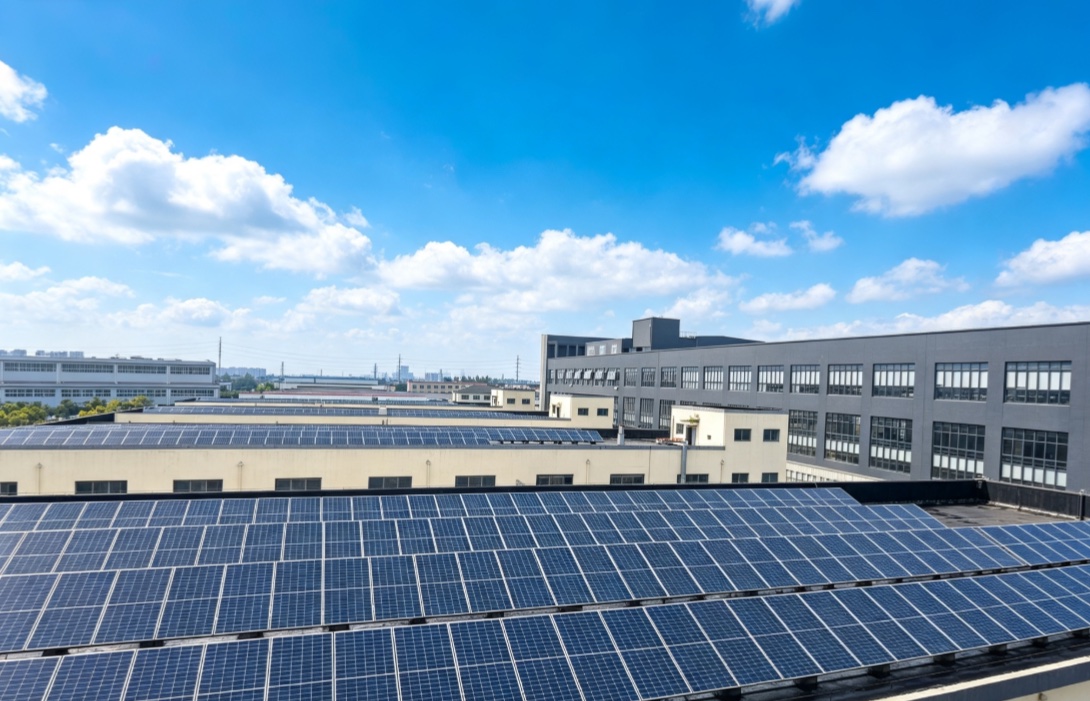
A photovoltaic array installed on the plant roof generates renewable electricity for extrusion, printing and lamination.
Design destruction efficiency of our RTO on industrial VOC waste gas from solvent-based processes.
Share of thermal-oxidation exhaust heat captured by the regenerative beds and returned to the unit.
Certified environmental management system — certificate no. 55324E10024R0S.
Energy, emissions, efficiency and materials. Each pillar is a real installation on our Jiangyin site — click through for the detail behind it.
Solar photovoltaic systems are deployed in our factory to utilize renewable solar energy and reduce carbon emissions.
The roof of our 11,000+ m² plant is a working part of the production chain. Generated electricity is consumed on site by the extrusion, printing and lamination lines — powering the process at the exact moment it is needed instead of buying it back from the grid. On-site generation also shelters our customers from the carbon intensity of the local power mix, which matters more every year as packaging declarations tighten.
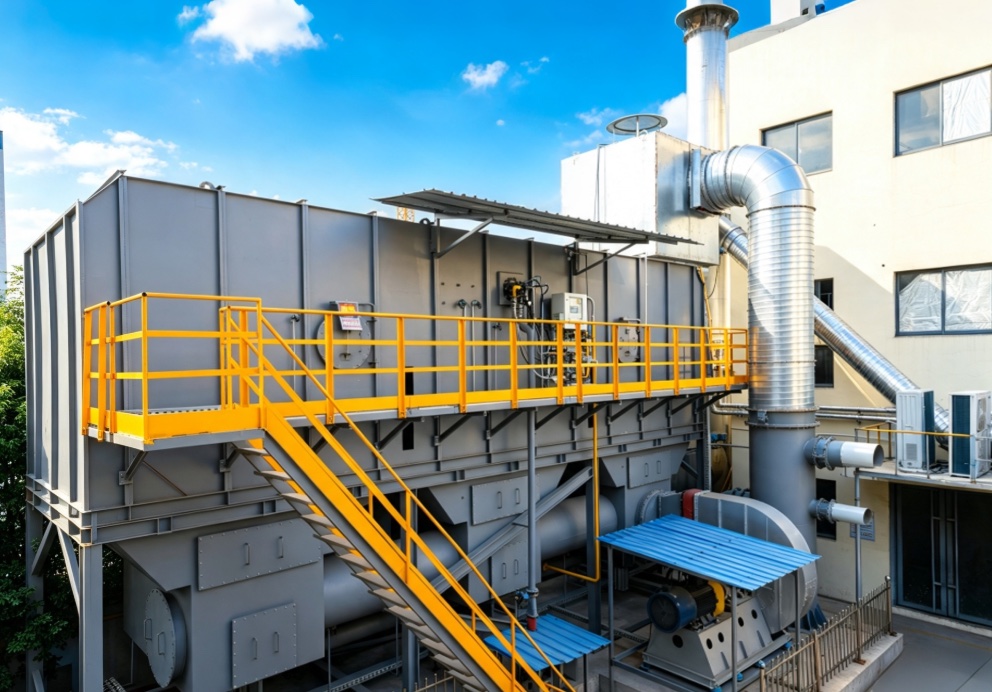
We equip RTO regenerative thermal oxidizer facilities for high-efficiency industrial VOC waste gas abatement.
Solvent-based printing and lamination release volatile organic compounds. Rather than venting them, we route the exhaust stream through a regenerative thermal oxidiser, where the VOCs are destroyed by high-temperature oxidation. Regenerative ceramic beds capture the heat of that reaction and pre-heat the incoming gas, so the system runs largely on its own recovered energy instead of continuously burning fuel.
Design value for the oxidiser at operating temperature. Actual performance is verified by stack monitoring.
Capturing heat from thermal oxidation exhaust gas, our Heat Recovery System ensures a stable energy supply for the unit.
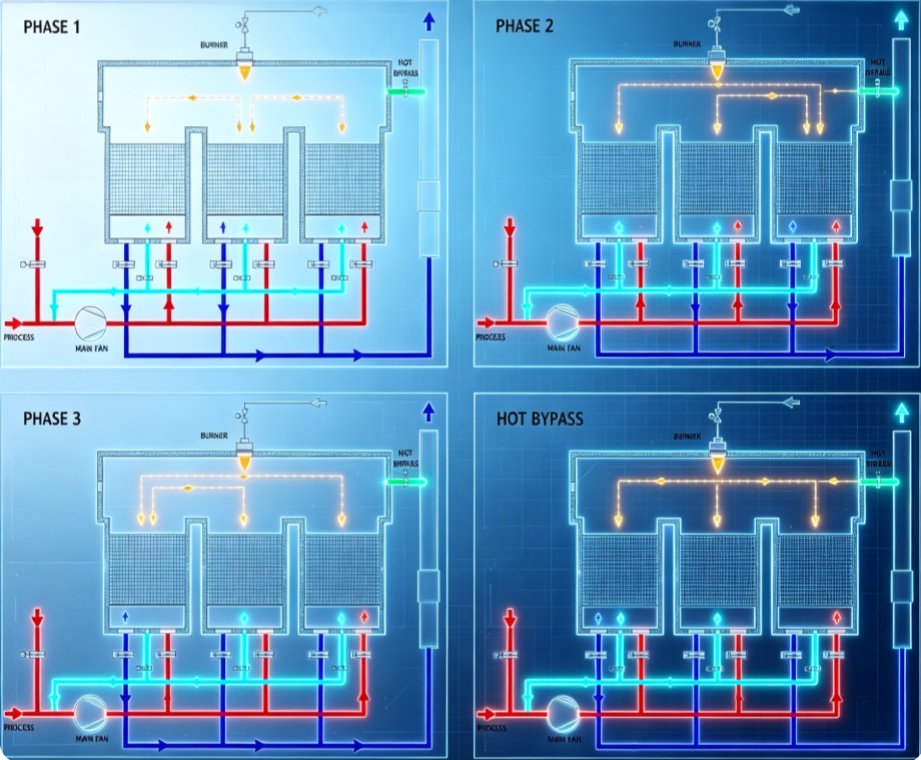
Oxidation destroys pollutants, but it also produces heat — and that heat is the asset. The regenerative beds work in a continuous rotation: gas passing out of the combustion zone gives up its energy to a ceramic bed, and gas passing in absorbs it again. Because the cycle never stops, the oxidiser largely powers its own thermal load and needs far less supplementary fuel than a conventional incinerator.
Raw waste gas is drawn in by the main fan and pre-heated as it passes through the first ceramic bed.
The inlet switches to the second bed for pre-heating while the first bed stores the outgoing heat.
The third bed completes the rotation, keeping the heat exchange continuous and even.
A bypass path protects the unit and keeps the line stable under abnormal thermal conditions.
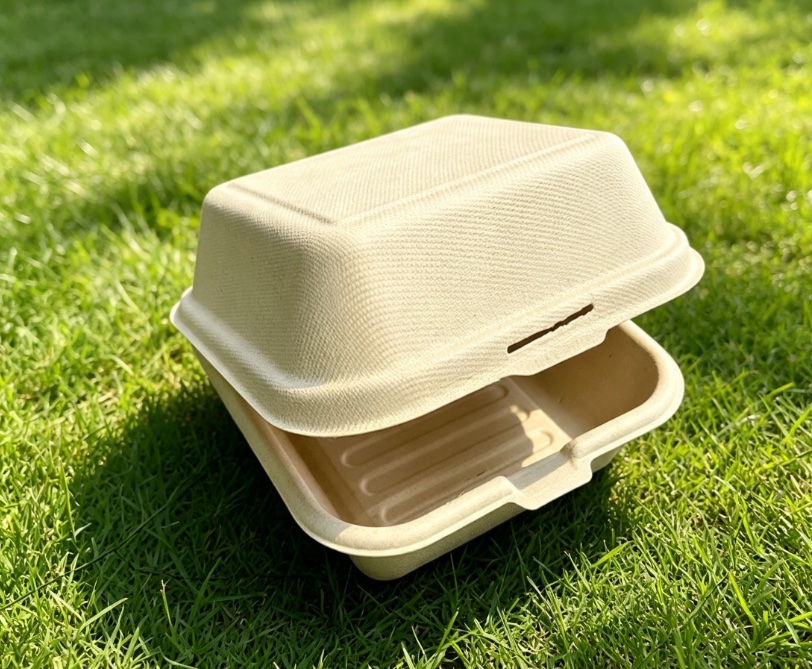
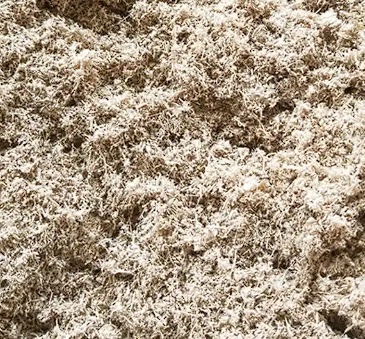
We develop cast film CPET materials compatible with biodegradable substrates, balancing packaging functionality and eco-friendly goals.
The hardest problem in sustainable packaging is not making a material that degrades — it is making one that still protects the product. Our work on cast film CPET sits exactly on that trade-off. CPET tolerates oven and microwave temperatures, seals reliably and carries print well; paired with biodegradable substrates such as fibre-based and bio-derived layers, it lets a pack keep its technical performance while materially reducing what is left behind at end of life.
CPET cast film holds its shape and seal at serving temperatures.
Works with biodegradable fibre and bio-derived layers in one structure.
Barrier, seal strength and print quality are validated in our lab.